Showing posts with label Children's Nonfiction. Show all posts

Thursday, July 26, 2012

Some Fun (and varied) Back-to-School Reads!

Olivia and the Best Teacher Ever
Adapted by Ilanit Oliver
Illustrated by Shane L. Johnson

Olivia's teacher, Mrs. Hoggenmuller, is competing for the Teacher of the Year award. The winner of the award gets her picture up on all the school buses for that year! A judge, Mrs. Stern, comes to observe the class and decide whether Mrs. Hoggenmuller is worthy of the award. Olivia and her friends decide that they are going to do all in their power to show that their teacher should be Teacher of the Year. Despite all their efforts, when the class frog lands on Mrs. Stern's head, Mrs. Stern leaves in a huff, promising that Mrs. Hoggenmuller will not be the recipient of the award.

I always feel a bit skeptical of books that are adapted from a well-known and loved character. Ian Falconer's Olivia books are lovely. Though Olivia and the Best Teacher Ever pales in comparison to the original Olivia stories, children who have fallen in love with this creative pig will also enjoy this story.


Dora Goes to School
Adapted by Leslie Valdes
Illustrated by Robert Roper

Children who love Dora the Explorer will enjoy this little story! Dora is on her way to her first day of school when she meets up with la maestra Beatriz, whose bike has gotten a flat tire! How will Dora, Boots and Maestra Beatriz get to school on time? Children will enjoy following along on Dora's map to see the exciting route taken to get to school on time. The bright, colorful pictures will appeal to young readers as well.


Marco Goes to School
By Roz Chast

I was pretty excited about this book when I opened it up. Marco is a little red bird whose mother happens to be a human. He is bored. Bored with his sandbox, bored with the TV, bored with doing laundry. Marco's mom tells him that he's going to be starting school. When Marco goes to school, he makes a new friend and gets to experience classroom life.

Though some of the humor was fun and a little quirky, and though the illustrations were fun, I was a little disappointed with the book. The story felt disjointed in places, and at one point I started at an illustration and the text underneath for a while, trying to figure out its connection to the story. I was also disappointed that the teacher and learning in the school environment were so poorly portrayed. Pretty much all the teacher says is, "Blah, blah, blah," and Marco is constantly tuning her out in favor of his much more interesting fantasies. Maybe worth a read, but not my favorite!


One of a Kind
By Ariel S. Winter
Illustrated by David Hitch
One of a Kind in an imaginative story about a little boy named Lysander who is the only only child attending a school for twins. He feels left out and alone until the school's yearly event Twindividuation, which is a series of events 'meant to encourage individuality.' In each of the events of Twindividuation, Lysander excels. Whether it's singing a solo or the one-man relay, or choosing a flavor of ice cream without twin consultation. Lysander learns that, though being an individual can sometimes be lonely, sometimes being an individual has its benefits too. Very cute! Check it out!


Off to Class: Incredible and Unusual Schools Around the World
By Susan Hughes

Off to Class is one of my new favorite back-to-school reads. Simply put, this book tells the story of a wide variety of schools from around the world. I was pleasantly surprised to discover that the chapters don't cover the prosaic subjects like 'desks,' and 'writing utensils.' The author addresses some of these differences, but via different avenues. Many things prevent children from attending schools: weather, distance, financing. I was amazed to discover all of the creative ways those barriers are being overcome throughout the world to allow children to get the education they need! This book, written for middle-grade readers, does a nice job of mixing text and pictures, personal anecdotes and facts. I highly recommend Off to Class!


*These books were sent for review purposes.


Friday, June 22, 2012

Monkey Colors

Monkey Colors
By Darrin Lunde
Illustrated by Patricia J. Wynne

As I read this book, my mind was already busy trying to find a way to fit it into our preschool programs in the coming year. The story is simple: there are many monkeys throughout the world and lots of colors are represented in those monkeys! Through simple phrasing and bright clear pictures, children learn about the variety of monkeys throughout the world. In the back of the book, all the monkeys pictured previously are listed with a small picture and more detailed information. Monkey Colors is well worth a read!


*This book was sent for review purposes.

Out on the Prairie

Out on the Prairie
By Donna M. Bateman
Illustrated by Susan Swan

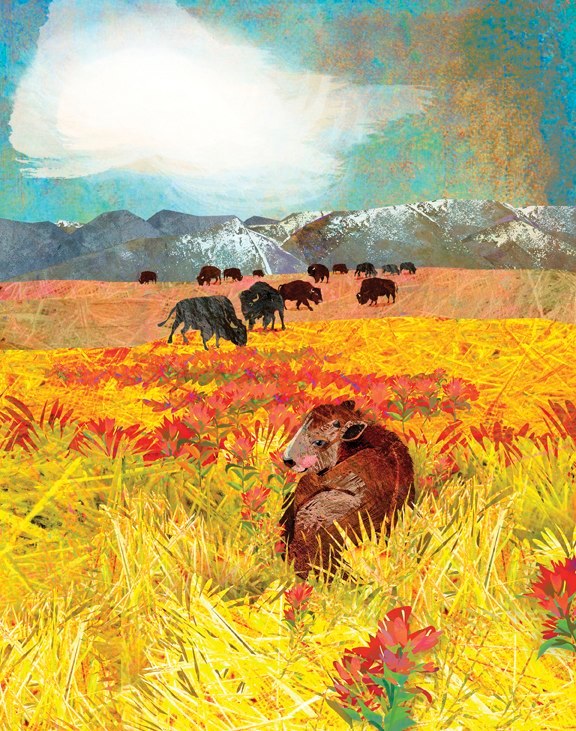
After spending most of my childhood summers tagging along on my dad's field ecology classes out west near the Badlands National Park, I may be just a little bit biased toward any book written about the vast beauty of this area. However, I think any objective observer would agree with me in saying that this is a worthwhile read.

Out on the Prairie is a counting story, in which readers are introduced to a new animal and its babies, in ascending number from the first page. Animals that children will be introduced to include bison, pronghorn, and meadowlarks, among others. (If you've never listened to a western meadowlark's call, you can find an example here. I love this call!) Sprinkled in among the animals are western North American plants, such as snakeroot, gramma grasses, and wheatgrasses.

This story is fun, but it's the illustrations that take me back to western South Dakota and make me smile. Beautiful. Detailed. Bright. Accurate. All of those work to describe the digital paper cut illustrations in this book. 


This book would work great for reading one-on-one with a child or in a group setting. I think first or second grade would get the most from this lovely little book!


*This book was sent for review purposes.


Thursday, June 21, 2012

Presidential Pets

Presidential Pets: The Weird, Wacky, Little, Big, Scary, Strange Animals That Have lived in the White House
By: Julie Moberg
Illustrated by: Jeff Albrecht Studios

Did you know that President John Quincy Adams had a pet alligator? I certainly didn't, but I do now; I learned that and more in this book!

This delightful book, as you may guess, tells readers about the wide range of pets that have called the White House home. Starting with George Washington and ending with Barack Hussein Obama II, each page spread is devoted to one of the presidents. Each spread starts with a quirky poem about that president's pet(s) and has additional information about the pet, presidential stats, and accomplishments of the president. The reader will also be drawn to the vibrant cartoon illustrations on every page spread!

I really appreciated the way information was arranged in this book. Readers are not overwhelmed when they open up this book. They can pick and choose. If they just want to read a fun poem, they can do that. And then they can read a little bit more about the pets when their interest is piqued. And then a little more about the president's stats... and then his achievements... This book is great for readers ages 9-12 and anyone who enjoys obscure historical data!


*This book was sent for review purposes.

Can You Tell a Cricket from a Grasshopper? Can you Tell a Gecko from a Salamander?

Can You Tell a Cricket from a Grasshopper?
By Buffy Silverman

Can You Tell a Gecko from a Salamander?
By Buffy Silverman

I learned so much about crickets, grasshoppers, geckos, and salamanders in these two books! Both books are filled with bright up-close photos and interesting facts. I thought the facts were made even more interesting and memorable when one animal was compared to another. (Did you know that a grasshopper's ears are located on its abdomen but a cricket's ears are located on its front legs? I didn't!)

I also appreciated that even though this book targets young readers, it is still set up like a nonfiction chapter book, complete with a table of contents, chapters, index, glossary, and citations for further reading. I love books that give kids a good taste of (fun) nonfiction!


*This book was sent for review purposes.

Saturday, June 16, 2012

Eight Days Gone

Eight Days Gone
By Linda McReynolds
Illustrated by Ryan O'Rourke

Eight Days Gone tells the story of the Apollo 11's first trip to the moon in 1969. The story, told rhyming verses, is fast-moving, interspersing excellent vocabulary along the way, like 'sprawling,' and 'module.' The pictures are fun and manage to be bright, clear, and crisp. I was a little bit disappointed with the story-- I wish there had been a few more details to tell such a fascinating story! However, over all, I did enjoy Eight Days Gone. Great for a read-aloud and to spark conversation about space travel!


*This book was sent for review purposes.

Vivaldi's Four Seasons

Vivaldi's Four Seasons
By Anna Harwell Celenza
Illustrated by JoAnn E. Kitchel

Even if you don't think you know 'Four Seasons by Vivaldi, chances are good that you will recognize it when you hear it. If you watch the first 10 seconds of this video, you'll probably start thinking to yourself, "Oooh, that's what that piece is called!" Go ahead; listen to just a little bit of it:


Recognize it?

What you heard was the first movement, 'Spring,' on which this little book is based. I've always appreciated 'The Four Seasons' by Vivaldi, but this book gives my appreciation for the movement entitled 'Spring' a whole new depth!

Written by a professor of music at Georgetown University, Vivaldi's Four Seasons tells the story of how Vivaldi taught and came to love the orphaned girls of the Ospedale della Pietá. Suddenly (or at least, it seems sudden to the reader) Vivaldi is asked to leave the orphanage. He continues to miss the girls at the Pietá. Eventually he is asked to write pieces for the girls to play, although he is not asked to come back to teach the girls. As a surprise to the girls, he comes back with the first piece, 'Spring,' and narrates it while they play.

I enjoyed learning the history behind this famous piece of music! Celenza's story is fun and her characters are lovable. I do recommend reading the part of the story where Vivaldi narrates 'Spring' either after listening to the accompanying CD or while listening. I read without listening and found it a little confusing.

Though this book has lovely, colorful illustrations, I recommend this book for a slightly older crowd: around 9-12 years old. There's so much meat to this story and reading about what the music means is abstract enough that I'm afraid a lot of it will be lost on younger readers.

Over all, a very fun story!

*This book was sent for review purposes.

Charlesbridge Publishing | Anna Harwell Celenza | JoAnn E. Kitchel

Friday, June 15, 2012

This is the House that George Built

This is the House that George Built
By Suzanne Slade
Illustrated by Rebecca Bond

When I picked up The House that George Built, I thought to myself, "Hmm. That almost sounds like the poem "This is the House that Jack Built." I realized when I started reading that the connotation was intentional!

In this clever little book that plays off of the old poem, "This is the House that Jack Built," readers get an inside look at the construction of the White House: how the design was decided upon, the materials that were used, and how the structure of the building went up. I was amazed at how... difficult construction of a building of that size sounded! I must really take for granted all the machinery we have to work with that George Washington and the people helping him did not have! 

Although I thought the rhymes in this story often come across as awkward, I still thought the poem was a fun idea. Readers can choose to read just the simple poem or a more detailed description of the construction project. I also loved the detailed watercolor pictures.

The House that George Built is a great little book from Charlesbridge Publishing that deals skillfully with a little-known part of American history!


Wednesday, May 23, 2012

More from Sylvan Dell Publishing!


I have the honor of introducing to you a few more great Sylvan Dell Publishing books! Hopefully, by now, you are as much in love with Sylvan Dell as I am!

Written by Scotti Cohn
Illustrated by Susan Detwiler

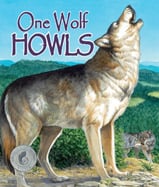
Children will have so much fun reading this book that they won’t even realize they’re learning. Or, even better, they will realize they’re learning and decide that learning’s fun! This story follows a pack of wolves through the months of the year; each page spread shows a new month and adds one new wolf to the pack. 

The story is written in a lilting chant that will make this a fun read-aloud book. The words are beautiful, and it’s fun to experience the mix of poetry and biology! Only in a few places did the rhyming sound forced. The illustrations are bright and detailed; each page is a beautiful contrast to the pages before it. Kids’ eyes will be glued to this book as they read!

As always with Sylvan Dell, the last pages of the book offer great educational games for kids to play. My personal favorite was a wolf communication activity, in which the reader matches the wolf’s posture with the message the wolf is trying to convey. For someone who can be a little nervous around strange dogs (like me), this might just come in handy!

Written by Phyllis Perry
Illustrated by Susan Detwiler

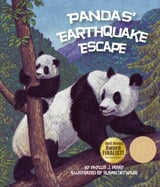
This Mom’s Choice Awards winner tells the gripping story of Liling and Tengfei, a panda and her cub, who lived through the 7.9 earthquake that hit northern China in May of 2008. Liling and her cub are peacefully sleeping in a tree when the ground beneath begins to shake. The shuddering ground causes the tree limb to break off and both pandas plummet to the ground. They are not hurt, but the wall of the enclosure in the reserve where they live is knocked down. Frightened by the rocking ground, the pandas flee into the mountains. They wander, foraging for food and huddling in fear when more quakes shake the ground. Eventually their keepers at the reserve find Liling and Tengfei and bring them home.

I really appreciated this book. The first thought that struck me was that I rarely get the chance to read about natural disasters from an animal’s point of view. I was made to think about just how disorienting that experience must be for an animal. Also, for an animal that has lived its entire life in a reserve, suddenly roaming around a forest and needing to find food would be quite terrifying!

Susan Detwiler did not disappoint with her magnificent illustrations. Through her illustrations, I was able to experience the rich flora of a mountain in China. The emotion she conveyed on the faces of the pandas had me sympathizing with them over their plight!

I hope you enjoy these excellent reads from Sylvan Dell Publishing!


Wednesday, April 4, 2012

Sylvan Dell Publishing-- five new books

I fell in love with Sylvan Dell Publishing a few months ago, and the books described here are no exception! As you read about the five books below, keep in mind that besides great stories, each of these books from Sylvan Dell Publishing has a rich wealth of resources in the back of the book with a variety of activities relating to the topics mentioned in the story. I love these, both for using in a school setting and at home! As if the resources in the books weren’t enough, readers can also go online to the Sylvan Dell Publishing website to find additional resources for teachers and parents.  

Home in the Cave
By Janet Halfmann
Illustrated by Shennen Bersani

In Home in the Cave Baby Bat lives with his mother on a ceiling deep within a cave. While other baby bats are excited about stretching their wings to get ready for the day when they can go hunting outside of the cave with their moms, Baby Bat is afraid. He wants to stay in the cave forever. One night he decides to try to fly, just once. When he does, he falls onto the floor of the cave and meets a packrat named Pluribus. Pluribus takes Baby Bat around the floor of the cave to see all of the animals that never leave the cave and live on the bat guano. When Baby Bat realizes that so many other animals depend on him and the other bats, he decides he might be ready to leave the cave after all.

I wish I had had books like these when I was younger. The way the author weaves scientific facts into a fun story about a baby bat show clearly that she did her research before writing. The dialogue between Baby Bat and Pluribus does at times feel a little stilted, jam-packed as it is with facts, but overall the facts compliment the story, rather than hindering it. The illustrations are soft, yet accurate, educational as well as entertaining! All of Bersani’s traveling to different caves around the U.S. paid off, as is evident in these illustrations! I can imagine any child wanting to read and re-read the story of Baby Bat.

The Penguin Lady
By Carol A. Cole
Illustrated by Sherry Rogers

Penelope loves to wear black and white. Soon, friends and family start to send her penguins. First, her brother sends her one penguin from the Galapagos Islands, then her sister gives her two Rockhopper penguins from Argentina, then she receives three Chinstrap penguins from Antarctica. And her penguin family continues to grow! Children will learn on multiple levels while reading this book. Simple counting is reinforced, and children will learn the names and origins of a number of penguin species. Children will also be reminded that there can be too much of a good thing! I appreciated how fun and yet simple this story is. I hope that we have a chance to use it in our library programs in the future. This book would also be great for reading one-on-one with a child!

Gopher to the Rescue! A Volcano Recovery Story
By Terry Catasús Jennings
Illustrated by Laurie O’Keefe

Gopher lives on a mountain with other animals. One day they begin to feel rumblings deep in the earth. A volcano explodes! When it does, many animals are killed, but not Gopher. Gopher is safe and comfortable in his burrow. When gopher emerges from his burrow, he sees a land hot and dry, covered in ash. Very few other animals have survived the blast. Bit by bit, by digging, gopher helps the soil recover. Plants slowly begin to grow. Animals return: first insects, then birds, and then larger animals like elk. Months, years, and then decades pass, and the mountain becomes a lush place for animals to live again.

The slow recovery of a habitat after a volcanic eruption is a difficult subject for young children to grasp and one not often attempted in picture books. However, this author/illustrator team does an excellent job of bringing the topic down to where a child will be interested and able to understand. I appreciate the unique way in which this book shows the recovery of the mountain literally from the ground up. Children will be riveted by these beautifully crafted illustrations, and they will begin to grasp the order in which life returns to an area following a volcanic blast.

Three Little Beavers
By Jean Heilprin Diehl
Illustrated by Cathy Morrison

Bevan, Beverly, and Beatrix are beavers who live in a creek. When Beatrix swims up the creek by herself, she finds a meadow outside of Beaver Inn. Suddenly, a trap shuts around her! Thankfully, this trap is one that doesn’t hurt animals. When her siblings come to find her, they are trapped in box traps as well. People find the three beavers the next day and decide they need to move the beavers far away where they won’t hurt the plants by the Inn. A little girl comes up with an idea that allows the Inn to keep its plants safe but also allows the beavers to stay in their home.

This is a lovely little story. The pictures are bright and beautiful, and little tidbits of beaver facts are sprinkled throughout. Children will enjoy this simple story but learn some important truths as well. I especially appreciated how the story reminds readers that removing animals is not the only option when animals are perceived as pesky. Sometimes a little creativity is all it takes to allow animals and people to live together successfully.

The Great Divide
By Suzanne Slade
Illustrated by Erin E. Hunter

Did you know that a group of foxes is called a skulk? Or that a group of squirrels is called a dray? Readers will learn the unexpected names for groups of all kinds of animals in this book, as well as get a chance to practice simple division. Because readers need to be able to count the animals on the page (unless they already know simple division problems by memory), this book will not work well to read to large groups, but it is an excellent choice for one-on-one reading. I enjoyed the beautiful illustrations on each page and the rhyming verses that shared the math challenge and the name for the group of animals pictured. Overall, this book will make math fun for reluctant young mathematicians and reinforce the value in children who already enjoy math. Definitely a treasure!

If you enjoy these books, check them out at Sylvan Dell Publishing. Keep in mind that you have options for purchasing these delightful books. You can purchase the books in hardcover, paperback, or as eBook downloads. You can also purchase an eBook subscription, which will include Auto-Read and Selectable English and Spanish text and audio.

*These were sent as review copies.*

Thursday, March 8, 2012

A Butterfly is Patient


A Butterfly is Patient
By Dianna Hutts Aston
Illustrated by Sylvia Long

A Butterfly is Patient is another beautifully written non-fiction book for children. I wish I could describe to you exactly how much I love the books by this author and illustrator team. They make me want to jump up and down for joy. In this book, children will learn about the life cycle of butterflies, pollination and how butterflies help with it, how butterflies camouflage themselves, that a butterfly is not a moth (one of my favorites!), among other things. I appreciate the spectacular and accurate illustrations in this book! I also like the format: Each page has a large heading that can be read by itself for younger readers and then further description written below for older readers. This book will make you and your children simply fall in love with butterflies!

Look for other titles by this author and illustrator team:

An Egg is Quiet
A Seed is Sleepy

Tuesday, February 28, 2012

Some Awesome Nonfiction for Kids

I just wanted to quickly share with you some amazing (in my opinion) nonfiction books for kids. 

Sylvan Dell Publishing has put out a number of books that deal with science, math, and geography in fun ways for kids. The paintings in the books are big and bright, and subjects that could be made dry and difficult for kids to grasp (like 'habitat') are made fun and interesting.

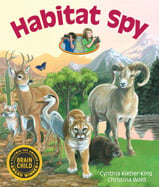
One of my favorites is called Habitat Spy by Cynthia Keber-King and Christina Wald. This book is set up like an I Spy book, where the reader is asked to search for certain items. Each page spread features a different habitat: a backyard, a meadow, a pond, and so forth. The pictures are drawn to accurately represent plants and animals. I appreciate that kids aren't only asked to look for big ticket items, like deer and fox. They're also asked to look for algae and lichen. I love it! You can find this particular book here.


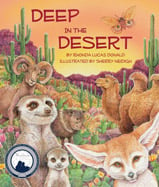
Another of my favorites is Deep in the Desert. This book puts different aspects of desert ecology to the rhythms of traditional children's songs. My coworker and I sat in our office one day and sang through the book. The songs don't sound awkward in more than a couple of places. Such a fun way to learn about the desert! You can find Deep in the Desert here.

Wednesday, February 22, 2012

"Outside Your Window: A First Book of Nature" by Nicola Davies


The ingeniousness of this book is that it teaches children about nature and also gently introduces them to looser, more flexible styles of poetry. Over 106 pages of breathtaking cut-paper illustrations, children are presented with poems and prose over subjects such as, “Listen to the Pond,” “Making Compost,” “Honey,” “Pond Dipping,” “Five Reasons to Keep Chickens,” “Leaves,” “Fungi,” and “Winter Trees.”

One of my favorite selections from this book is called “This is the Loaf that Jack Baked.” Presented in the same format at the well-known story, “This is the House that Jack Built,” this story teaches children that a loaf of bread comes from flour, which comes from grains of wheat, which comes from an ear, which comes from a stalk, which comes from a seed planted in the ground, which was planted by a person. What a clever way to teach children where food comes from!

Most of the poems in this book do not rhyme, and the similes and metaphors may be a bit difficult for younger children to grasp, but the illustrations in this book are what firmly sells it as a masterpiece. I appreciate how this book introduces children to the natural mysteries and wonders that can be found right outside one’s back door and subtly shows children exciting yet simple ways to explore nature.

A must-read!